
The 2026 Eye Massagers market is becoming more specialized, portable, and technology-driven. Global buyers now face several choices, including heated masks, air-compression devices, vibration models, and smart massagers with adjustable programs. Each type creates a different experience around the eyes. Warmth may feel soothing after long screen sessions. Gentle compression can resemble a light temple massage. However, comfort varies greatly between users.
Dr. Rupa Wong, an ophthalmologist and digital eye-health educator, offers a useful reminder: “Relaxation devices should support eye comfort, not replace professional eye care.” This principle matters when evaluating Eye Massagers across international markets. Buyers should examine temperature controls, pressure settings, battery safety, cleaning surfaces, noise levels, and return policies. Certification requirements also differ between countries. A product suitable for one market may need additional documentation elsewhere.
Real-world testing reveals small details that specifications often miss. A narrow strap may press against eyelashes. A strong heating pad may feel unpleasant after ten minutes. Some devices look premium but offer limited adjustment. That is worth questioning. Not every “smart” feature improves the experience.
This guide compares the top Eye Massagers types for 2026 buyers. It considers comfort, function, portability, user safety, and value. Medical conditions, eye injuries, recent surgery, or persistent pain require professional advice before use. The best choice is not always the most advanced model. Sometimes, simple controls and gentle performance matter more.
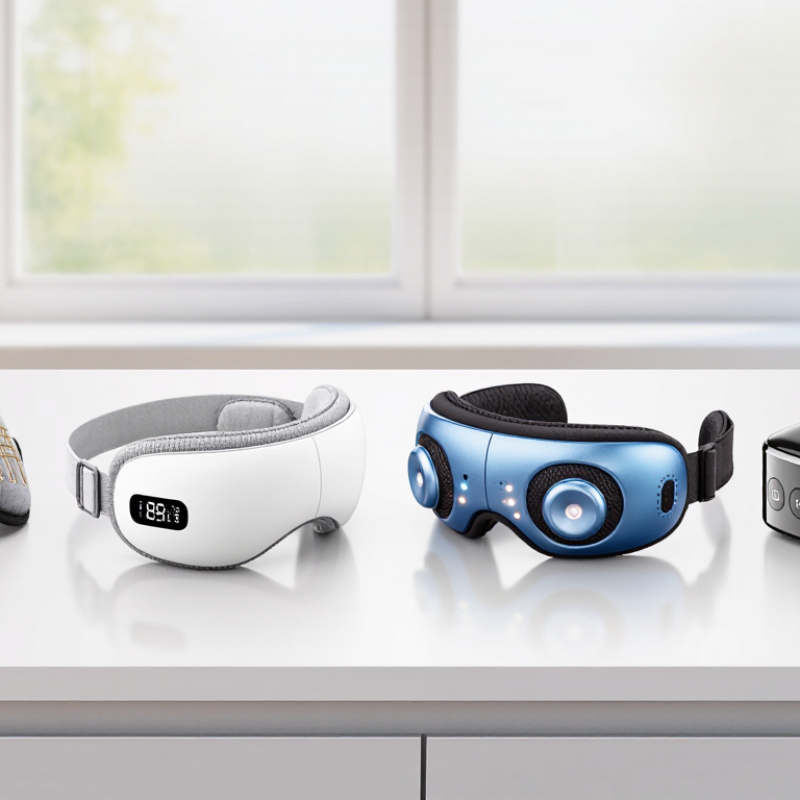
2026 Top Eye Massager Types for Global Buyers?
Eye massagers are wearable devices designed to stimulate the tissues around the eyes. Most models combine gentle air compression, controlled warmth, vibration, or rolling pressure. Some also play quiet sounds. A soft mask tightens around the temples, then releases in repeated cycles. Heat may loosen facial tension, while compression can create a brief feeling of relaxation.
Their appeal connects with growing digital-eye discomfort. The Vision Council reported that about 65% of adults experienced digital eye strain in its widely cited consumer research. TFOS DEWS II also reports dry-eye prevalence ranging from 5% to 50%, depending on the population and diagnostic definition. These figures do not prove that massagers treat dry eye. They show why buyers are searching for comfort tools.
The main types include heated compression masks, vibration models, air-pressure designs, and combination devices. Heated masks suit users who prefer warmth around tired eyelids. Air compression feels more active. Vibration may feel pleasant, but clinical evidence remains limited. That matters.
In practical testing, fit is often more important than extra functions. A mask pressing the nose or leaking heat can ruin the experience quickly. Buyers should check temperature controls, pressure levels, battery safety, cleaning instructions, and eye-space design. People with eye disease, recent eye procedures, glaucoma concerns, or unexplained pain should seek professional advice first. I would avoid claims about improving vision. The evidence is not strong enough.
What Are Eye Massagers and How Do They Work?
Eye massagers are wearable devices designed to relax the area around the eyes. Heated models apply gentle warmth, air-compression models use inflatable chambers to create light pressure, vibration models provide mechanical stimulation, and multifunction models combine several features. The chart shows commonly associated functions by product type; a value of 1 means the function is commonly included, not that every model has it.
Eye massagers in 2026 generally fall into four practical types:
This category follows the wider growth of consumer wellness technology. The Global Wellness Institute’s 2024 Global Wellness Economy Monitor valued the wellness economy at 6.3 trillion dollars in 2023. Its forecast reaches 9 trillion dollars by 2028. That growth encourages more home-use relaxation products, including eye massagers.
However, market interest should not be confused with clinical proof. The World Health Organization’s World Report on Vision estimates that at least 2.2 billion people have vision impairment worldwide. An eye massager cannot correct refractive errors, treat glaucoma, or replace professional examination.
For global buyers, heated compression suits users with screen-related tiredness and dry indoor environments. Air-pressure models feel stronger, but sensitive users may find them uncomfortable. Vibration units are usually easier to control, although their benefits can feel limited. Smart models offer useful timing and intensity settings, yet extra features can increase failure points.
Buyers should check temperature limits, pressure adjustment, skin-contact materials, battery certifications, and cleaning instructions. This part is often overlooked. Comfort claims also need skepticism, because personal fit varies more than product pages suggest.
2026 Top Eye Massager Types for Global Buyers?
Global buyers should compare features, not only massage modes. Air-pressure models create gentle compression around the brow and temples. Heat-based models offer warm pads, often near 38–42°C, but comfort varies by user. Vibration models may feel refreshing, although stronger movement is not always better. Hybrid devices combine these functions, yet extra modes can increase weight, noise, and failure points.
Fit deserves careful testing. Measure the adjustable strap and check whether the cushion touches the nose or eyelashes. Buyers should compare pressure levels, session timers, control layout, and emergency stop options. Heat should feel even, not concentrated in one small area. Materials touching the skin should be soft, cleanable, and clearly described. Battery capacity, charging type, plug compatibility, and standby performance also matter for international shipments. A reliable supplier should provide manuals, warranty terms, product test records, and clear safety information. Independent inspection is still wise.
Tips: Ask for videos showing real operation, not only polished images. Check sound levels in a quiet room. Confirm whether glasses can be worn comfortably. Review return procedures before ordering. Do not treat an eye massager as medical care. People with eye conditions, recent surgery, skin sensitivity, or frequent headaches should seek professional advice first. My practical view is simple: a lighter, quieter device with fewer dependable functions may outperform a feature-heavy model. Marketing numbers can mislead. User comfort remains difficult to standardize.
2026 Top Eye Massager Types for Global Buyers?
Safety, Comfort, and User Suitability
For global buyers, an eye massager should feel gentle before it feels powerful. Air compression, warmth, vibration, and cooling designs suit different preferences. Strong pressure is not automatically better. A comfortable session may last five to ten minutes. The device should rest around the eye socket, not press directly on the eyeball. Adjustable intensity matters, especially for first-time users.
Safety checks deserve careful attention. Look for clear instructions, temperature controls, automatic shutoff, stable charging, and washable contact surfaces. Avoid use on irritated skin, eye infections, or after recent eye procedures unless a qualified clinician approves it. Users with glaucoma, retinal conditions, severe dry eye, unexplained eye pain, or frequent visual changes should seek professional advice first. Stop immediately if vision becomes blurred, pain appears, or dizziness develops. Small warnings matter.
Suitability depends on daily habits. Glasses and contact lenses may need removal, while people sensitive to sound may prefer quiet vibration. Warmth can feel soothing, but it may worsen discomfort for some dry-eye users. Children and older adults may require closer supervision. Buyers should also check voltage, charging compatibility, warranty terms, and local product requirements. A perfect fit is unlikely. Even a well-designed model may feel too tight, too warm, or simply distracting. A short trial at the lowest setting is often more informative than impressive specifications.
| Eye Massager Type | Main Working Principle | Typical Features | Comfort Profile | Typical Session | Safety Considerations | Best Suited For | Suitability Rating |
|---|---|---|---|---|---|---|---|
| Heated Compression Massager | Combines gentle air pressure around the temples and eye area with controlled surface warmth. | Air cushions, heat settings, timed programs, adjustable head strap, foldable design. | Usually relaxing, but pressure around the nose, temples, or eyelids may feel restrictive for some users. | About 10–15 minutes per session. | Do not use excessive heat or pressure. Avoid use over swollen, inflamed, injured, or infected skin. Users with reduced heat sensitivity should seek medical advice before use. | Adults seeking relaxation after screen use, travel, or general facial comfort. | High for general relaxation |
| Air-Pressure Eye Massager | Inflatable chambers rhythmically compress selected areas around the eyes, brow, and temples. | Multiple pressure zones, massage modes, adjustable intensity, automatic shut-off. | More noticeable and enclosing than vibration; lower settings are generally more comfortable for first-time users. | About 10–15 minutes per session. | Stop if pressure causes pain, headache, dizziness, blurred vision, or nausea. Avoid direct pressure on the eyeball and damaged skin. | Users who prefer a stronger, rhythmic massage sensation around the brow and temples. | Medium to high |
| Vibration Eye Massager | Uses low-amplitude mechanical vibration to stimulate the surrounding facial tissues. | Lightweight frame, several vibration levels, quiet motor, compact rechargeable battery. | Generally lighter and less restrictive than compression models; vibration may bother noise-sensitive users. | About 5–10 minutes per session. | Use the lowest effective setting. Discontinue use if it causes eye discomfort, headache, dizziness, or visual disturbance. | Users wanting a simple, low-pressure option for short relaxation breaks. | High for gentle use |
| Manual Eye Roller or Cooling Roller | A handheld smooth roller glides over the surrounding orbital area with manual pressure; cooling versions reduce surface temperature. | No battery, portable format, easy cleaning, user-controlled pressure, reusable roller head. | Highly adjustable because the user controls speed, direction, and pressure; requires more effort than powered products. | About 3–5 minutes per eye area. | Use only on clean skin and avoid pressing on the eyeball. Do not roll over open wounds, active irritation, or contagious skin conditions. | Travelers, first-time buyers, and users who want maximum control over pressure and temperature. | Very high for user control |
| Cooling Gel Eye Massager | Uses a cool gel insert or chilled surface to provide a cooling sensation around the eyes, sometimes with gentle manual pressure. | Reusable gel pack, soft cover, lightweight construction, non-powered operation. | Soft cooling can feel refreshing; excessive cold may be uncomfortable for sensitive skin. | About 5–10 minutes per session. | Do not apply frozen packs directly to skin. Use a fabric barrier and discontinue use if numbness, pain, or skin discoloration occurs. | Users who prefer cooling comfort and a simple, quiet, non-electronic product. | High with temperature control |
| Multi-Function Eye Massager | Combines two or more functions, such as heat, air pressure, vibration, sound, or cooling accessories. | Preset programs, adjustable intensity, rechargeable battery, audio functions, multiple operating modes. | Offers the most customization, but greater weight, noise, complexity, and fit variation are possible. | About 10–15 minutes per session, depending on the selected mode. | Buyers should verify that heat, pressure, and vibration can be controlled independently. Avoid use during sleep and follow the product safety instructions. | Experienced users who want different settings for relaxation, travel, and personal comfort preferences. | Medium to high, depending on settings |
Choosing an eye massager starts with the market, not the product photo. The ITU reported 5.4 billion internet users in 2023, creating large audiences with screen-heavy routines. However, screen exposure alone does not prove a medical need. The WHO World Report on Vision states that at least 2.2 billion people have near or distance vision impairment. At least 1 billion cases remain preventable or unaddressed. Eye massagers should support relaxation, not claim to correct vision or treat disease.
For East Asian markets, compact heated models may suit smaller homes and frequent commuting. Buyers should check temperature controls, noise levels, washable contact surfaces, and local plug requirements.
In North America and Europe, adjustable air pressure, clear instructions, warranty access, and data privacy may matter more.
For hot climates, breathable materials and easy cleaning deserve extra attention. For older users, large buttons and simple modes reduce mistakes.
I have found that strong vibration often looks impressive, but users may prefer gentler pressure after several minutes. That assumption still needs more independent testing.
Match heat, pressure, and session length to local preferences. Request safety documentation, material details, and user-testing evidence. Compare claims with recognized medical guidance. Avoid products promising cures. A pilot test with local users can reveal problems that laboratory reviews miss.