What is a 3 Phase Frequency Converter and How Does it Work?
In today's industrial landscape, the significance of a 3 phase frequency converter cannot be overstated. These devices play a vital role in energy management and efficient operation of various machinery. By converting power sources, they ensure consistent frequency and voltage, catering to the needs of different applications.
Understanding how a 3 phase frequency converter operates is essential for industries relying on precise power control. This technology is crucial for machinery that operates at specific frequencies. Moreover, it aids in optimizing energy usage, which can lead to cost savings and enhanced productivity. There are many factors to consider, from selection to installation, that can significantly influence performance.
However, the complexity of these converters can lead to misunderstandings. Not every application calls for a 3 phase frequency converter. Users must assess their specific needs meticulously. This careful evaluation helps in avoiding unnecessary expenditures and operational inefficiencies. Embracing this technology with a knowledgeable approach can pave the way for improved outcomes in various industrial settings.
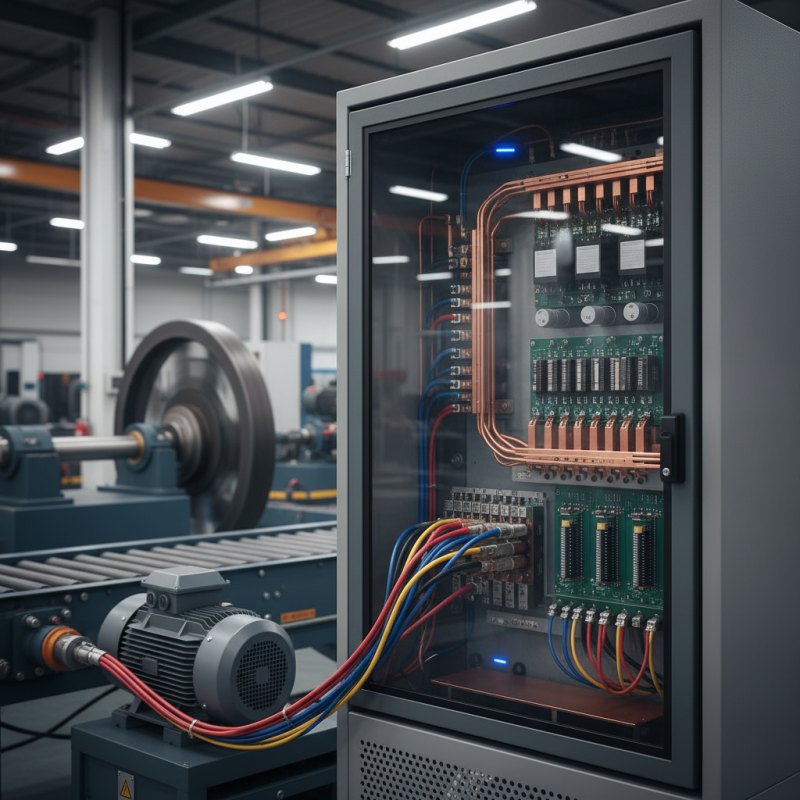
What is a 3 Phase Frequency Converter?
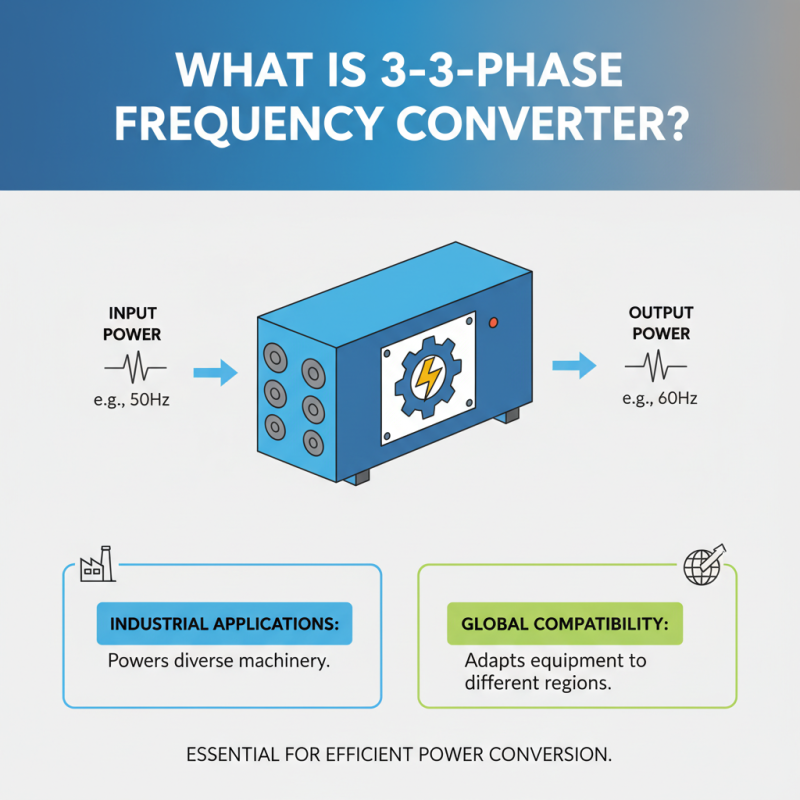
A 3 Phase Frequency Converter is an essential device in industrial applications. It transforms electrical power from one frequency to another. This conversion allows equipment designed for specific frequencies to operate efficiently in different environments.
This type of converter works by adjusting the voltage and current supplied to motors. By changing the frequency, it can alter the speed and torque of motors. Such flexibility is crucial for operations that require precise control, like manufacturing machinery. The technology behind this device is intricate, involving advanced control systems and power electronics.
However, not all converters are perfect. They can introduce harmonics, which may disrupt power quality. Users must consider their specific needs before implementation. Balancing performance and efficiency is often a challenge. In practice, the right selection depends on application requirements and existing electrical infrastructure.
Principle of Operation for Frequency Conversion
A 3 Phase Frequency Converter alters the frequency of electrical power in three-phase systems. This device is essential in various industries, especially where motors and machinery require specific operating frequencies. Understanding its principle of operation is crucial for optimizing its performance.
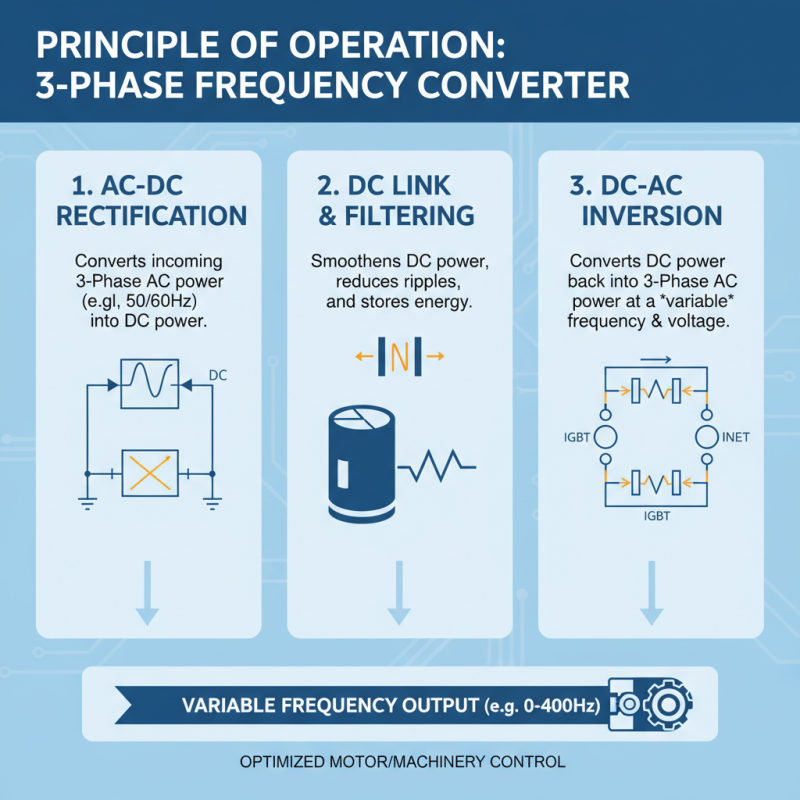
The frequency conversion process involves rectifying AC power into DC power. This step initiates the transformation. After this, the DC power is inverted back to AC at the desired frequency. The conversion can be controlled precisely, allowing for adjustments based on the load requirements. Effective cooling systems are necessary. Without them, the converter can overheat and fail.
Operators must be cautious. Not all systems tolerate every frequency change well. Operating outside recommended limits may lead to inefficiencies or damage. Regular monitoring is essential to ensure reliability. Additionally, installing such converters requires skilled technicians. Proper configuration and maintenance make a significant difference in performance. The intricacy of this equipment warrants careful assessment during operation.
Components of a 3 Phase Frequency Converter
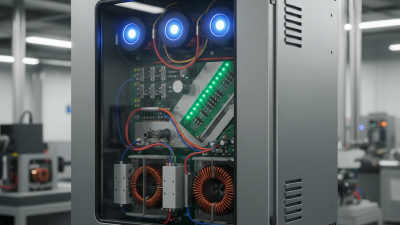
A 3 Phase Frequency Converter is essential for many industrial applications. Understanding its components can reveal much about its operation. The main components include rectifiers, inverters, and filters. Rectifiers convert AC voltage to DC voltage. This conversion is critical in providing a stable power source for the inverter.
The inverter then takes this DC voltage and converts it back into AC voltage at a desired frequency. This process requires careful design to ensure efficiency. Filters play an important role by smoothing out the output. They reduce harmonics that may affect electrical equipment. However, building a reliable filter is often challenging. Selecting the right type might involve trade-offs.
Combining these components effectively allows for versatile speed control in motors. Users can adjust the frequency as needed. However, implementing a frequency converter system may require careful planning. Not every application will benefit equally from this technology. Producers should assess their needs and constraints thoroughly. Emphasizing good design can lead to better performance and durability. Each part should be scrutinized for potential issues.
Applications of 3 Phase Frequency Converters in Industry
Three-phase frequency converters are essential in modern industrial applications. These devices convert electrical power from one frequency to another. They play a crucial role in ensuring the proper operation of electric motors and other equipment. Many industries rely on them for efficient and precise control of machinery.
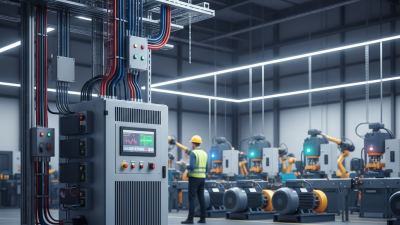
In manufacturing, these converters help optimize motor speed and torque. This results in improved performance and energy savings. For instance, a conveyor system may need to adjust its speed based on production demands. A frequency converter allows this flexibility without significant wear and tear on equipment. Food processing facilities utilize them for various mixing and pumping tasks, ensuring consistent product quality.
However, not all applications run smoothly. Issues like harmonics can arise, affecting overall system efficiency. Additionally, proper installation and maintenance are vital for reliability. When improperly used, converters can lead to equipment failure. Understanding these factors is crucial for industries aiming to harness the full potential of three-phase frequency converters.
Benefits and Limitations of Using Frequency Converters
Frequency converters play a vital role in modern electrical systems. They allow the conversion of standard power supply frequencies, enhancing the efficiency of various devices. However, their applicability comes with distinct benefits and limitations.
One significant benefit of using frequency converters is their ability to optimize energy consumption. By adjusting power frequency, they can help in reducing operational costs. Additionally, they enable the use of equipment designed for different frequency standards. This is particularly useful in industries that deal with imported machinery. Moreover, frequency converters can improve the performance of electric motors by facilitating smoother starts and preventing damage from voltage spikes.
On the downside, frequency converters can lead to increased electrical noise. This can interfere with sensitive equipment. They also require proper understanding for installation and maintenance. Mistakes in setup may lead to inefficiencies or even equipment failure. Furthermore, these devices can vary greatly in quality. Not every converter meets high standards. Users should thoroughly research and consider reliable sources before making a decision. While frequency converters offer significant advantages, awareness of their drawbacks is essential for optimal use.
What is a 3 Phase Frequency Converter and How Does it Work? - Benefits and Limitations of Using Frequency Converters
| Aspect |
Description |
| Definition |
A device that converts three-phase AC power from one frequency to another. |
| Functionality |
Modulates the frequency of the incoming power supply to adjust the speed of motors or adapt power for specific applications. |
| Benefits |
Enhanced motor control, energy savings, and compatibility with varying electrical systems. |
| Limitations |
Potential harmonic distortion, initial costs, and varying efficiency depending on load conditions. |
| Common Applications |
Used in industrial processes, renewable energy systems, and in applications where precise motor speed control is needed. |
| Types |
Includes rotary converters, static converters, and more advanced digital frequency converters. |