Global equipment sourcing is expanding as manufacturers, laboratories, hospitals, and infrastructure projects cross national power standards. The International Energy Agency’s Electricity 2024 report expects global electricity demand to grow by about 4% annually through 2026. That growth increases the need for dependable power conversion between regional grids and imported machinery.
Frequency is only one part of the decision. A 50hz to 60hz frequency converter may also need to match voltage, phase configuration, rated power, starting current, and waveform quality. A factory motor can react differently from a sensitive medical instrument. A converter that runs quietly beside a control cabinet may struggle with a compressor’s sudden startup load. Small details matter.
This guide compares five practical options for global buyers. It considers continuous capacity, overload performance, input and output flexibility, cooling, noise, protection features, and service support. The evaluation also references IEC 61800-3 for adjustable-speed power-drive electromagnetic compatibility and IEC 60034-1 for rotating electrical machines. These standards do not replace local verification. They provide a clearer technical baseline.
The IEA data shows why reliable power infrastructure deserves attention. Yet market claims can be overly optimistic. Published efficiency figures may reflect ideal conditions, not dusty workshops or unstable supply lines. That is an important limitation. Buyers should confirm test conditions, certification records, warranty coverage, and installation requirements before ordering.
There is no universal winner. The best choice depends on the load, location, duty cycle, and budget. This shortlist aims to make that decision more practical, transparent, and technically defensible.
A 50Hz-to-60Hz converter changes electrical frequency, not automatically voltage or phase. IEC 60038 identifies both 50Hz and 60Hz as standard supply frequencies. Global buyers must therefore verify frequency, voltage, phase, grounding, and plug configuration separately. The IEA Electricity 2024 report projects global electricity demand to grow by an average of 3.3% annually from 2024 to 2026. More cross-border equipment will follow.
Motor speed needs careful checking. A four-pole motor runs near 1,500 revolutions per minute at 50Hz and 1,800 at 60Hz, before slip. That 20% increase can raise pump flow, fan load, noise, and heat. The simple rule is not always enough. Engineers should review the motor nameplate, starting current, duty cycle, and required output torque. A converter rated only for running power may trip during startup.
Sizing requires real operating data. Record the equipment’s kilowatts, amperes, phase count, and maximum inrush current. For sensitive controls, confirm waveform quality and harmonic limits. The IEC 61800-3 framework provides guidance for adjustable-speed drive electromagnetic compatibility. Field testing is still valuable. A converter may perform well in a workshop, yet struggle inside a hot cabinet with restricted airflow. That overlooked detail often changes the specification.
Global buyers should compare more than a converter’s 50Hz-to-60Hz label. Check the input voltage, output voltage, phase type, and available power. A single-phase load needs different equipment from a three-phase motor. Confirm the motor’s starting current, not only its running wattage. A converter rated near the load limit may overheat during startup. Leave practical capacity headroom.
Output quality also matters. Look for stable frequency control, low waveform distortion, and voltage regulation under changing loads. Sensitive laboratory or medical equipment may require cleaner power than heating systems. Protection features should include overload, short-circuit, overtemperature, and input surge protection. Enclosure rating matters in dusty workshops or humid ports. Efficiency, cooling noise, dimensions, and terminal access affect daily operation. Installation manuals should provide clear wiring diagrams and grounding requirements. Independent test reports and applicable safety certifications improve purchasing confidence. Still, paperwork cannot replace a load test.
Tips: Request a sample nameplate before ordering. Verify frequency tolerance, phase sequence, and continuous-duty ratings with the supplier. Test the converter with the real load, if possible. One overlooked detail can delay commissioning. Check local grid conditions, plug standards, spare parts, and technical support hours. I have seen buyers focus on price, then discover that a compact unit lacks enough starting capacity. A short trial under realistic conditions often exposes that mistake early.
Five Leading 50Hz-to-60Hz Frequency Converter Options
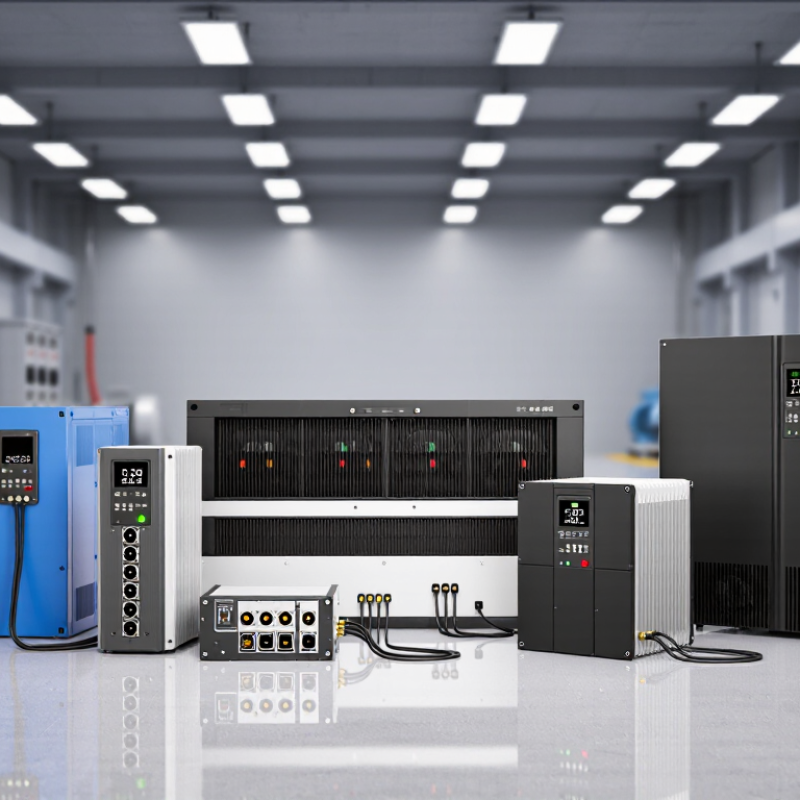
Global buyers usually compare five main converter options: static electronic, rotary, motor-generator, modular digital, and bidirectional converters. Each serves a different operating environment. Static electronic models suit laboratories, medical equipment, and office systems because they provide compact size and accurate frequency control. Rotary converters handle demanding industrial loads, including pumps and compressors, but they require more floor space and routine bearing checks.
Motor-generator sets remain useful where electrical isolation matters. They can support sensitive machinery, although their noise and maintenance requirements may discourage indoor installation. Modular digital converters offer scalable power. A buyer can add capacity later, but the control system needs careful commissioning. Bidirectional converters work well for testing equipment that must accept and return energy, such as drive systems and battery-related loads.
Selection should begin with the load, not the converter label. Check input voltage, phase configuration, rated power, starting current, waveform quality, and continuous-duty capacity. A 10 kW motor may briefly demand several times its running current. That detail can change the required converter size.
Installation conditions matter too. Measure ambient temperature, ventilation space, cable length, and grounding quality. In field commissioning, unstable output often comes from undersized wiring rather than the converter itself. A lower-cost unit may appear efficient. It may not tolerate frequent overloads. Buyers should request test reports, efficiency data, protection functions, and service procedures before ordering. Local electrical requirements still need independent verification.
Comparison of representative converter configurations by continuous output capacity and typical conversion efficiency.
These five options represent commonly available 50Hz-to-60Hz converter configurations. Static converters are generally compact and efficient for sensitive equipment, while rotary and motor-generator systems are often selected for higher continuous loads. Actual performance depends on input voltage, load profile, cooling method, and installation conditions.
Selecting a 50Hz-to-60Hz converter starts with the equipment, not its advertised power rating. The IEA’s Energy Efficiency 2011 analysis estimates that motor systems consume nearly half of global electricity. That makes frequency control a practical efficiency decision. Check the nameplate voltage, phase, rated current, starting current, and permitted frequency range. Do not assume every 60Hz motor accepts any 60Hz supply. Voltage matters more.
For pumps, compressors, and machine tools, compare continuous kVA with peak demand. A converter sized only for running current may trip during acceleration. Choose adjustable ramping, overload protection, and a documented output waveform. Sine-wave output is generally safer for motors and sensitive controls than crude stepped waveforms. Ask for THD data, cooling requirements, noise levels, and duty-cycle limits. IEC 60038 helps verify nominal supply voltages, but it cannot replace equipment instructions. This distinction is easy to miss.
Global procurement also requires checking 50Hz input stability, 60Hz output tolerance, phase compatibility, and local certification. The IEA’s Energy Efficiency 2023 report reinforces the importance of system-level efficiency; converter losses, cables, and ventilation belong in the calculation. A practical test includes a loaded trial, temperature logging, and restart testing. Leave headroom. I would question any selection based on kW alone. It sounds efficient, yet field conditions are rarely tidy. Record the assumptions and revisit them before purchase.
| Converter Type | Rated Capacity | Input Specification | Output Specification | Phase Configuration | Output Waveform | Frequency Accuracy | Typical Efficiency | Protection Functions | Recommended Equipment |
|---|---|---|---|---|---|---|---|---|---|
|
Unit A — Compact Laboratory Converter Best for small loads |
1.5 kVA continuous 2.0 kVA for 60 seconds |
Single-phase 220–240 V AC 50 Hz |
Single-phase 220–240 V AC 60 Hz |
Single-phase input Single-phase output |
Pure sine wave THD ≤ 3% |
±0.01 Hz | Up to 90% | Overload, short circuit, over-temperature, input under-voltage and output over-voltage protection | Laboratory instruments, small pumps, test equipment, audio systems and light-duty motors |
|
Unit B — General-Purpose Industrial Converter Best overall balance |
5 kVA continuous 7.5 kVA for 60 seconds |
Single-phase 220–240 V AC 50 Hz |
Single-phase 220–240 V AC 60 Hz |
Single-phase input Single-phase output |
Pure sine wave THD ≤ 2.5% |
±0.01 Hz | Up to 92% | Input surge suppression, overload, short circuit, over-temperature, DC protection and emergency shutdown | Machine tools, refrigeration equipment, office equipment, fans and imported appliances |
|
Unit C — Three-Phase Motor Converter Best for rotating machinery |
15 kVA continuous 22.5 kVA for 60 seconds |
Three-phase 380–415 V AC 50 Hz |
Three-phase 380–415 V AC 60 Hz |
Three-phase input Three-phase output |
Pure sine wave THD ≤ 3% |
±0.02 Hz | Up to 94% | Phase-loss, phase-sequence, overload, short circuit, over-temperature and motor-start protection | Three-phase motors, compressors, CNC equipment, conveyors and industrial pumps |
|
Unit D — High-Capacity Industrial Converter Best for continuous production loads |
50 kVA continuous 75 kVA for 60 seconds |
Three-phase 380–415 V AC 50 Hz |
Three-phase 380–415 V AC 60 Hz |
Three-phase input Three-phase output |
Pure sine wave THD ≤ 2% |
±0.01 Hz | Up to 96% | Input and output circuit breakers, overload, short circuit, phase imbalance, over-temperature and bypass protection | Production lines, large HVAC systems, industrial test benches and heavy-duty manufacturing equipment |
|
Unit E — Precision Converter with Adjustable Output Best for sensitive equipment |
10 kVA continuous 15 kVA for 60 seconds |
Single-phase 220–240 V AC 50 Hz |
Single-phase 220–240 V AC 45–65 Hz adjustable Default: 60 Hz |
Single-phase input Single-phase output |
Pure sine wave THD ≤ 1.5% |
±0.005 Hz | Up to 93% | Voltage regulation, overload, short circuit, over-temperature, output-current limiting and alarm logging | Medical devices, calibration systems, laboratory loads, precision electronics and frequency-sensitive test equipment |
When comparing five 50Hz-to-60Hz frequency converters, installation details deserve equal attention. Confirm the supply voltage, phase arrangement, rated power, and motor starting current before purchase. A converter that matches running watts may still fail during startup. Measure twice.
Place the unit on a rigid, dry surface with clear airflow around its vents. Leave space for cable bending and future inspection. Avoid dusty rooms, direct sunlight, and areas near leaking pipes. Use correctly sized cables, protective breakers, and a verified grounding connection. A qualified electrician should check the wiring and output frequency before energizing the equipment. My first commissioning checklist once missed the neutral connection. That small oversight delayed testing and exposed how easily assumptions become hazards.
Safety procedures should include isolation, lockout, and a short no-load test. Check that the output remains stable under changing loads, especially with pumps, compressors, or older motors. Heat is the enemy. During maintenance, inspect terminals for discoloration, listen for unusual fan noise, and remove dust with approved methods. Record voltage, frequency, temperature, and fault codes after each service visit. Replace damaged insulation immediately. Keep spare fuses and cooling fans available, but do not bypass protective devices. Some installations still need adjustment after the first month, because local heat, humidity, and load patterns can differ from the original test conditions.