China Best Phase Converter 3 to 1 Price Guide for Buyers?

Buying a phase converter 3 to 1 from China can reduce equipment costs, but price alone rarely tells the full story. A factory quote may look attractive beside a distributor’s offer, yet shipping, control panels, testing, and after-sales support can change the final figure. This guide introduces the main price factors for buyers comparing Chinese suppliers and models.

The correct converter depends on voltage, frequency, load capacity, motor starting current, and daily operating hours. A workshop running one small machine needs different protection than a factory powering several motors. Ask for rated output, input requirements, conversion efficiency, enclosure rating, cooling method, and wiring diagrams. Useful evidence includes factory test reports, product photographs, sample inspection records, and clear warranty terms. Supplier experience matters too. A manufacturer that explains motor-starting limits is usually more reliable than one offering only a low headline price.

Prices may vary with copper content, component brands, automation features, order quantity, and customization. Freight from Shenzhen, Ningbo, or another port can also affect landed cost. Do not ignore installation and maintenance. Small details matter. A loose terminal, unclear label, or missing manual can create expensive delays. This guide aims to support practical decisions using technical comparisons and buyer-focused checks. It is not a substitute for an electrical engineer’s site assessment. That limitation matters. Some specifications are difficult to verify remotely, and buyers should independently confirm compliance with applicable local standards before purchase.
China Best Phase Converter 3 to 1 Price Guide for Buyers?

Define 3-to-1 Phase Conversion: 220/380 V, 50/60 Hz, and 1–100 kVA

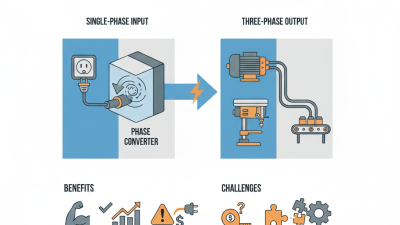
A 3-to-1 phase converter changes a three-phase supply into a single-phase output for equipment designed for one-phase operation. In many systems, 380 V refers to three-phase input, while 220 V supports single-phase loads. This relationship is common, but not universal. Always confirm the measured voltage before ordering.

Frequency matters too. A 50 Hz machine may run poorly on a 60 Hz supply, especially when motors, pumps, or compressors are involved. Converter capacity usually ranges from 1 to 100 kVA. Select capacity from continuous load, starting current, and future expansion. A 10 kVA unit may not safely start a motor rated near 10 kVA. That detail is often missed.

Tips: Ask for input and output voltage, phase arrangement, frequency, kVA rating, efficiency, cooling method, and protection functions. Compare total delivered cost, not only the quoted converter price. Installation materials can change the budget. In my experience, buyers sometimes calculate from the nameplate alone, then discover unstable starting performance. A site load test is wiser. Still, load readings can vary during production, so leave a practical margin and have a qualified electrician verify the final design.

Compare Rotary, Static, and Digital Converters by IEC 60034-1 Performance

When comparing China phase converter prices for three-phase to single-phase service, look beyond the quoted number. IEC 60034-1 evaluates rotating electrical machines, not converters alone. Therefore, assess how each converter supports motor voltage, frequency, temperature rise, and operating stability. Ask for measured data under load, not only a catalog rating.

Rotary converters usually provide smoother three-phase output for pumps, compressors, and older machine tools. Their motors and bearings need space, ventilation, and regular inspection. Static converters cost less and occupy less room. However, they may reduce motor starting performance and available horsepower. A machine that starts easily in a workshop may struggle with a loaded compressor.

Digital converters offer adjustable voltage and frequency, plus useful monitoring functions. They can improve speed control and reduce mechanical shock during startup. Check waveform quality, phase balance, overload response, and heat dissipation. Small displays can hide important limits. Request test records at the intended voltage and load.

Price comparisons should include installation, protection devices, enclosure quality, and maintenance. A low purchase price can become expensive after repeated trips or motor overheating. I have seen buyers focus on rated kilowatts while ignoring starting current. That was a costly assumption. Match the converter with the motor’s IEC 60034-1 temperature-rise class, duty cycle, and actual site conditions. Leave room for uncertainty. Real workshop loads are rarely as neat as spreadsheets.

China Best Phase Converter 3 to 1 Price Guide for Buyers - Compare Rotary, Static, and Digital Converters by IEC 60034-1 Performance

Comparison Dimension Rotary Phase Converter Static Phase Converter Digital Phase Converter
Operating principle Uses a motor-generator arrangement to create a balanced multi-phase supply. Uses capacitors to provide a starting phase and limited motor operation. Uses power electronics, rectification, switching, and digital control to synthesize the output.
Typical practical power range Approximately 2.2–37 kW for commonly specified industrial systems. Approximately 0.75–11 kW; normally selected below the motor nameplate rating. Approximately 0.75–75 kW, depending on the rectifier, inverter, cooling, and enclosure design.
Indicative budget price in China US$800–2,500 for a basic industrial unit, excluding freight, tax, installation, and protective devices. US$150–600 for a small unit, excluding capacitors, enclosure upgrades, wiring, and installation. US$600–3,000 for a general-purpose industrial unit; higher ratings and custom filtering increase the price.
Output voltage regulation Usually moderate; voltage balance depends on loading, idler sizing, and adjustment. Generally poor to moderate; phase voltage and current imbalance can increase with load. Generally the best of the three when closed-loop voltage and current control are provided.
Expected phase balance Often acceptable for industrial motors when correctly sized and tuned; verify under full load. Unbalanced output is common, especially with variable or lightly loaded motors. Typically the most consistent phase balance, subject to the design and load rating.
Approximate efficiency Approximately 85–95%, including idler and auxiliary losses. Approximately 90–98% during normal operation because there is no continuously running converter motor. Approximately 90–97%, depending on switching frequency, cooling, filtering, and load level.
Motor starting capability Good when the idler motor and converter are correctly oversized for starting current. Limited; unsuitable for many high-inertia, high-starting-torque, or frequently started motors. Very good when programmed with suitable acceleration, current limits, and overload protection.
Motor speed control Normally fixed-frequency operation; a separate variable-frequency drive may be required. Normally fixed-frequency operation with no inherent speed control. Often available through an integrated inverter or programmable frequency control.
Power factor and harmonics Power factor is affected by the idler motor and load; waveform is generally motor-like. Usually low harmonic generation, but capacitor selection can affect current balance and power factor. Input harmonics and conducted emissions may require filters or a suitable front-end design.
Noise and maintenance Audible motor noise and mechanical wear; bearings, cooling, and connections require inspection. Quiet and mechanically simple, but capacitors may age and require periodic testing. Low mechanical noise; requires attention to cooling fans, dust, control boards, and surge protection.
Protection features to request Overload, overtemperature, phase-loss, short-circuit, and emergency-stop provisions. Fuses or breakers, capacitor discharge protection, overload protection, and phase-loss monitoring. Overcurrent, overvoltage, undervoltage, short-circuit, overtemperature, ground-fault, and phase-loss protection.
IEC 60034-1 relevance IEC 60034-1 may apply to the rotating motor component, but it does not by itself certify the complete converter. IEC 60034-1 applies to the connected rotating machine, not to the capacitor converter as a standalone power-conversion product. IEC 60034-1 may be used for the motor performance interface; the converter also requires applicable power-electronic, EMC, and safety evaluation.
Recommended buyer verification Request full-load voltage balance, current balance, starting-current data, thermal test results, and wiring diagrams. Request the permitted motor-size range, derating curve, capacitor specifications, and measured phase-current imbalance. Request efficiency maps, harmonic measurements, EMC test information, overload duration, cooling requirements, and firmware protection settings.
Best application Workshops and industrial equipment requiring robust operation of several compatible motors. Light-duty applications with one motor, low starting demand, and a strong focus on low initial cost. Precision machinery, variable-speed equipment, frequent starting, energy monitoring, and demanding process control.
Buyer note: The price ranges are indicative budgetary estimates for China-sourced equipment and are not quotations. Actual pricing depends on rated voltage, frequency, power, enclosure, cooling, certifications, protection functions, testing, packaging, shipping, duties, and installation. IEC 60034-1 is primarily a standard for rotating electrical machines; it should not be treated as a standalone certification standard for a phase converter.

Map China Converter Prices by Capacity, Output Voltage, and Duty Rating

China Best Phase Converter 3 to 1 Price Guide for Buyers

Map China Converter Prices by Capacity, Output Voltage, and Duty Rating

When comparing China-made three-phase-to-single-phase converters, capacity is the first price driver. Small 3–5 kW units often suit light workshop tools and cost less. Medium 7.5–15 kW models require stronger cooling and heavier internal components. Their prices rise accordingly. Larger 20 kW or higher systems may need custom enclosures, protection devices, and shipping arrangements.

Output voltage changes the quotation. A 220V output may serve common equipment, while 380V or 400V configurations can support different industrial loads. Confirm input voltage, output voltage, frequency, and phase balance before comparing offers. Duty rating matters too. Intermittent-duty converters can be cheaper, but continuous-duty models are safer for pumps, compressors, and long production cycles. Ask for rated output, not only peak capacity.

Tips: Request a datasheet, wiring diagram, efficiency figure, noise level, and tested load record. Check whether the price includes control panels, breakers, cooling fans, and export packaging. A low quote may exclude these details. I have found that capacity labels are sometimes optimistic, especially when sellers use motor-starting power. That makes direct comparison imperfect. Leave extra capacity for startup current and future equipment. Also verify local electrical requirements with a qualified technician before installation. A spreadsheet helps, but it can still hide important differences.

Verify Efficiency, Power Factor, and IEC 61000-3-2 Compliance Before Buying

China Best Phase Converter 3 to 1 Price Guide for Buyers?

A low price can look attractive, but electrical performance should guide your comparison. Check efficiency at 25%, 50%, and 100% rated load. A converter showing 95% efficiency at full load may perform worse during light-duty operation. Measure input and output power with calibrated meters. Do not rely only on brochure figures.

Power factor also affects operating cost and upstream equipment size. Request power factor readings at the actual motor load, not only at laboratory conditions. Ask for harmonic current test results and confirm IEC 61000-3-2 applicability. This standard covers specific equipment and current ranges. It may not apply to every three-phase conversion system. A test report should identify voltage, frequency, load, and equipment class clearly.

Tips:

Compare identical ratings, enclosure requirements, and test conditions. Ask whether efficiency includes cooling fans and control circuits. Inspect the nameplate before ordering. A missing tolerance value deserves attention. I once overlooked standby losses during a price review, and the final calculation became less favorable. That small mistake changed the purchase decision. Also verify local installation requirements with a qualified electrician. Prices matter, but measurable performance protects the budget better.

Assess Suppliers Through MOQ, Warranty, Testing, and Total Delivered Cost

China Best Phase Converter 3 to 1 Price Guide for Buyers?

A reliable sourcing review should examine MOQ before comparing unit prices. MOQ is not merely a quantity threshold. Ask whether one unit is allowed for evaluation. Some suppliers quote lower prices only at larger volumes. Request prices for one, five, and twenty units. Compare the enclosure, control panel, cables, manuals, and spare fuses. A small order may cost more, but it reduces inventory risk.

Warranty terms need practical detail. Confirm the coverage period, repair process, response time, and excluded faults. Ask who pays return freight for a failed converter. Get the warranty in writing. Vague promises are difficult to enforce. I would also check whether replacement parts remain available after production changes. This point is often overlooked.

Testing evidence separates a serious supplier from a cheap listing. Request load-test records, input and output measurements, insulation checks, temperature readings, and protection tests. For a three-phase-to-single-phase converter, verify the rated load and allowable voltage range. Ask for photos showing the serial number beside the test instrument. Testing may be incomplete. That deserves scrutiny. Calculate total delivered cost, including packaging, inland transport, ocean or air freight, insurance, customs charges, duties, local delivery, installation, and commissioning. A low factory quote can become expensive at your receiving dock. Keep a small allowance for unexpected fees. It may feel excessive, but ignoring them is the costlier mistake.