Why Choose a 3 Phase 400Hz Frequency Converter for Your Needs?
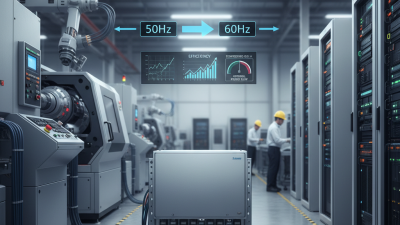
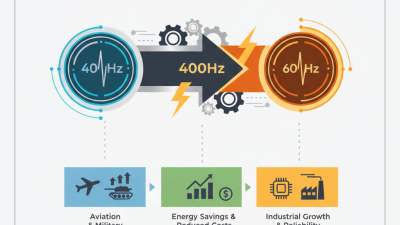
In today’s industrial landscape, efficiency and reliability are paramount. The 3 phase 400Hz frequency converter stands out as a vital solution for various applications. This technology enables high-performance systems to operate smoothly, especially in aerospace and military settings. Its ability to convert frequency from 50Hz or 60Hz to 400Hz is crucial for powering sensitive equipment.
Choosing a 3 phase 400Hz frequency converter involves careful consideration. Not all converters are created equal. Some may promise high efficiency but lack the necessary build quality. It's essential to evaluate the manufacturer's reputation and technical support. A reliable converter can enhance the longevity of your equipment, ultimately saving costs. Yet, users must also be aware of the potential pitfalls. Overlooking specifications can lead to inadequate performance.
This converter is not just a technical piece; it's a critical component. Ensuring it meets your specific needs will greatly impact your operations. Selecting the right 3 phase 400Hz frequency converter requires both knowledge and experience. It’s about finding a balance that aligns with your operational demands.
Understanding the Basics of 3 Phase 400Hz Frequency Converters
3 Phase 400Hz frequency converters are pivotal in various industries. Understanding the basics of these converters sheds light on their significance. Unlike standard 50Hz or 60Hz systems, 400Hz frequency converters power aviation, military, and aerospace applications effectively.
These converters offer several advantages. They allow for smaller, lighter, and more efficient equipment. For instance, generators and motors designed for 400Hz are typically more compact. This efficiency is vital in space-constrained environments like aircraft. However, using them may require careful planning and adjustment. Operating frequencies outside regular use can lead to compatibility issues in some scenarios.
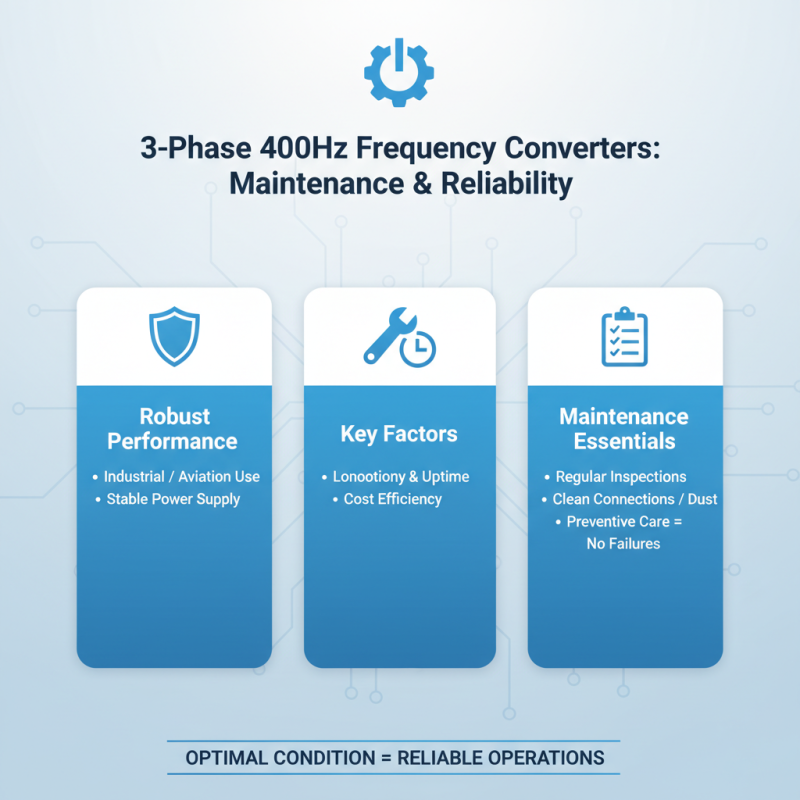
Maintenance and reliability are critical factors. A 3 Phase 400Hz frequency converter needs regular checks. Understanding its operational environment can prevent unexpected failures. Operators must ensure that the load requirements align with what the converter offers. Sometimes, underestimating this aspect can lead to performance limits. When selecting a converter, weigh its benefits against the potential challenges to achieve optimal performance.
Why Choose a 3 Phase 400Hz Frequency Converter for Your Needs?
| Feature |
Description |
Benefits |
| Output Frequency |
Converts to 400Hz |
Optimized for aviation and military applications |
| Power Rating |
Available in various power capacities |
Versatility for different equipment |
| Phase Type |
3 Phase Output |
Smoother power delivery for sensitive equipment |
| Form Factor |
Compact and portable designs available |
Ease of use in confined spaces |
| Cooling System |
Air or liquid-cooled options |
Enhanced longevity and performance under load |
| Control Features |
Advanced digital control options |
Precision voltage and frequency regulation |
| Applications |
Aerospace, military, telecommunication, and industrial |
Wide range of use cases |
Advantages of Using 3 Phase 400Hz Frequency Converters
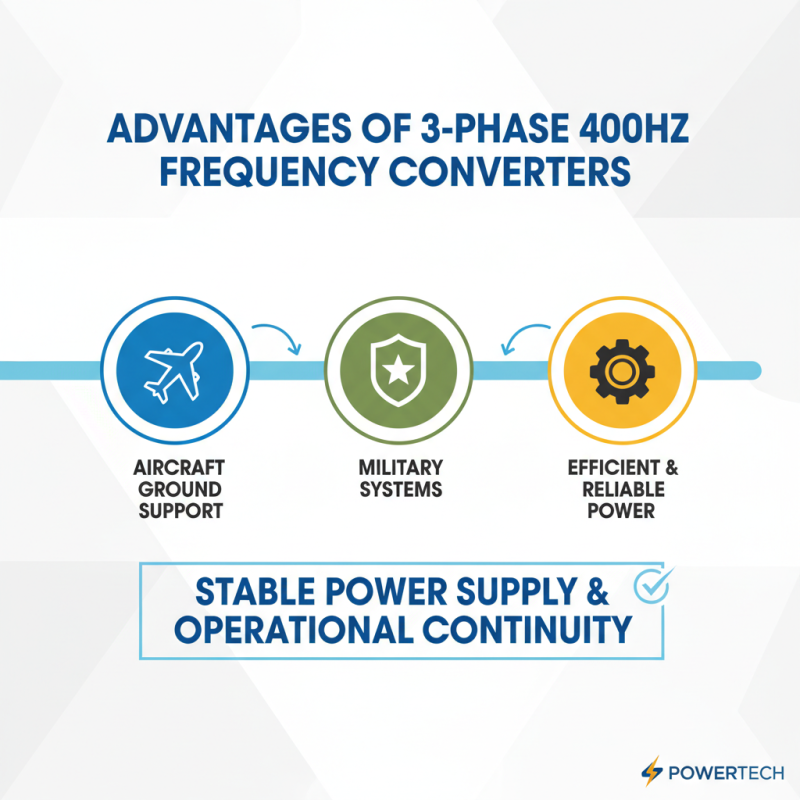
Three-phase 400Hz frequency converters are crucial for various applications. They provide a stable power supply for aircraft ground support equipment and military systems. These converters ensure efficient performance in settings demanding reliability and operational continuity.
One major advantage of 3-phase 400Hz converters is their ability to reduce the size and weight of electrical systems. According to a 2022 report from the International Society for Aircraft Electrical Power Systems, systems operating at higher frequencies allow for smaller transformer and power converter sizes. This results in lighter aircraft, improving fuel efficiency and overall operational costs.
Additionally, these converters enhance energy efficiency. They maintain optimal voltage levels and reduce harmonic distortion. This means that the equipment operates more smoothly and with less wear over time. According to the U.S. Department of Energy, systems that utilize 400Hz frequency converters can see energy savings of up to 30% compared to traditional 50Hz systems.
**Tip:** When selecting a frequency converter, consider your specific power requirements. Understanding your load can help you choose the right model.
**Tip:** Regular maintenance of frequency converters is key for optimal performance. Schedule check-ups to prevent unexpected downtimes.
In some instances, the initial investment in a 3-phase 400Hz frequency converter may seem high. Organizations need to consider the long-term savings and efficiency gains. This can lead to better overall value despite higher upfront costs.
Applications of 3 Phase 400Hz Frequency Converters in Various Industries
3 Phase 400Hz Frequency Converters are essential in various industries, particularly aerospace and military. These converters allow aircraft systems to operate efficiently while reducing weight. A recent industry report noted that approximately 80% of modern military aircraft utilize 400Hz power systems. This frequency is critical for avionics and high-demand electronic systems.
In industrial manufacturing, these converters play a key role as well. They ensure stable power supply to precision equipment. Data from the Manufacturing Technology Association shows that facilities using 400Hz converters experienced a 25% increase in equipment lifespan. This translates to significant cost savings over time.
However, not every operation requires 400Hz power. The initial investment can be high. Smaller manufacturers might struggle with upfront costs. Exploring alternative options is wise. Balancing needs with budget is crucial for sustainable growth. Companies must evaluate their specific requirements before committing. This approach ensures they derive maximum value from their equipment without overspending.
Factors to Consider When Choosing a 3 Phase 400Hz Frequency Converter
When selecting a 3 Phase 400Hz frequency converter, there are crucial factors to consider. The output voltage and frequency range are paramount. Many aerospace applications require consistent performance under varying loads. A report by Aerospace Industries Association highlighted that poorly managed frequency conversion can lead to inefficiencies up to 25%. This efficiency loss is significant when operating in critical environments.
Another vital aspect is the converter’s power rating. Understanding the required capacity helps avoid overheating. It’s essential to match the converter's power with the load. Investing in a unit that exceeds your needs can waste energy and resources. Research indicates that operational costs can increase by 15% due to oversizing converters.
Tip: Always review the technical specifications thoroughly. Don’t overlook the importance of cooling systems; they significantly affect operational reliability.
Pay attention to the installation process. A complex setup can lead to misconfigurations. The
International Electrotechnical Commission (IEC) states that nearly
30% of frequency converter issues arise from installation errors. Proper training for technicians acts as a buffer against these problems.
Tip: Regular maintenance helps in detecting early signs of wear. This proactive approach can save costs in the long run and ensure optimal performance.