How to Choose a 3 Phase Frequency Converter for Your Needs?
Selecting the right 3 phase frequency converter is crucial in ensuring the efficiency and effectiveness of industrial machinery. Expert engineer John Thompson emphasizes, "Choosing the right converter can save significant energy and reduce maintenance costs." This insight highlights the importance of understanding your specific needs before making a decision.
The world of 3 phase frequency converters is vast and complex. Different models serve varying applications, from small scale tasks to extensive industrial operations. When pondering your options, consider the load requirements, compatibility, and budget constraints. These factors can often lead to oversights in choice, creating inefficiencies down the line.
Moreover, manufacturers may market their products with promising features, yet not all may suit your specific application. It's vital to conduct thorough research and seek expert advice. Ultimately, the right choice in a 3 phase frequency converter could greatly influence productivity and operational success. Think critically about your options to avoid potential pitfalls.
Understanding 3 Phase Frequency Converters and Their Functionality
3 phase frequency converters play a crucial role in industrial applications. They convert single-phase power to three-phase power suitable for various types of machinery. According to a recent industry report by Grand View Research, the global frequency converter market is expected to grow by 5.2% annually from 2021 to 2028. This indicates a rising demand for efficient power management systems.
These converters enhance equipment performance by ensuring consistent voltage and frequency. They adjust the electrical output to match the needs of the connected equipment, minimizing energy loss. However, selecting the right converter can be complex. Not all converters can handle varying load requirements. Some may struggle under increased demand, leading to potential failures. Industry data suggests that about 15% of converters are underperforming due to miscalculations in load capacity.
Key features to evaluate include the power rating, efficiency, and control options. The converter's capability to manage harmonic distortion is essential, as excessive harmonics can damage sensitive equipment. Furthermore, consider the environmental conditions in which the converter will operate. Factors such as temperature and humidity impact performance significantly. A blind spot in planning can lead to operational inefficiencies and increased costs over time.
Identifying Your Power Requirements for a Frequency Converter
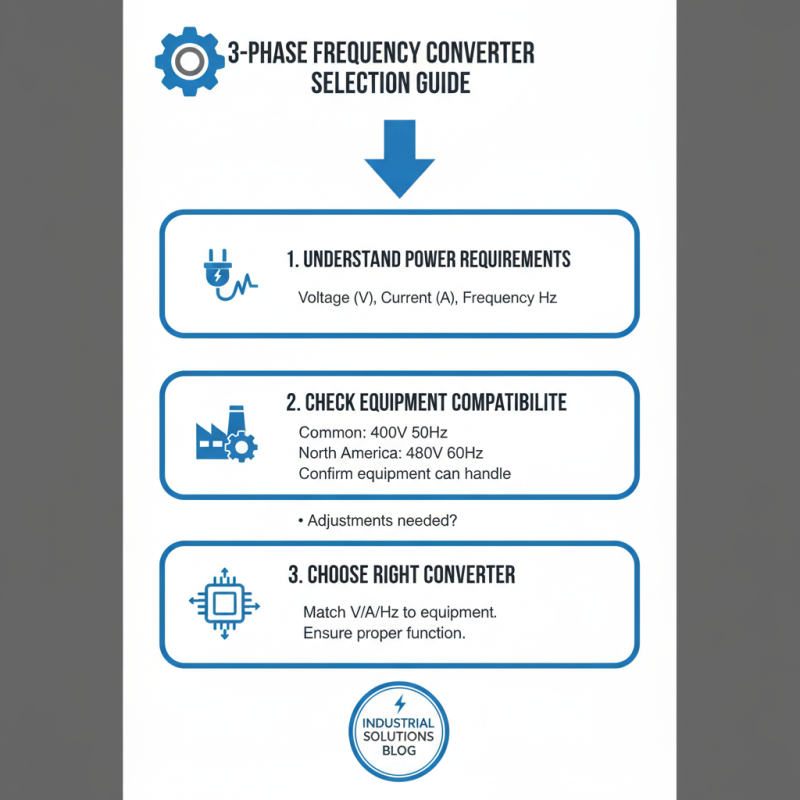
Choosing the right three-phase frequency converter starts with understanding your power requirements. Knowing your voltage, current, and frequency needs is critical. Many industrial applications operate at 400V and 50Hz, but some may require 480V and 60Hz. Determine if your equipment can handle these parameters and if any adjustments are necessary.
Tip: Assess your load type, whether it's resistive, inductive, or capacitive. This influences how the converter performs. Research shows that improper matching can lead to inefficiencies or equipment damage. For instance, a report from the International Electrotechnical Commission states that mismatched power requirements can reduce efficiency by up to 30%.
Consider your environment too. Are there temperature or humidity constraints? A frequency converter that works well in a controlled setting may struggle in harsher conditions. It's essential to evaluate cooling requirements and dust levels.
Tip: Regularly review and update your power needs. Equipment and applications evolve, impacting efficiency. A converter that matched well last year may now underperform. Adjust according to current operations and future expansions.
Evaluating Different Types of 3 Phase Frequency Converters Available
When choosing a 3 phase frequency converter, you find various types available. These devices can differ significantly in design, capacity, and functionality. It's crucial to match the converter type with your exact needs. For example, static converters are often less expensive but may not handle high loads effectively. In contrast, rotary converters tend to provide smoother output but can be bulkier and pricier.
Tips: Always assess your power requirements before making a decision. Consider both peak and average loads. This will help avoid potential underperformance.
Another option is the digital frequency converter. They offer advanced features like programmable settings. However, they can be complex and require regular updates. If you’re not tech-savvy, this complexity might be overwhelming. Think about your technical comfort level when selecting this type.
Tips: Keep in mind the installation space. Some converters need more room than others. Measure carefully to ensure proper fitting without overcrowding your area. This can prevent issues later.
How to Choose a 3 Phase Frequency Converter for Your Needs?
| Type |
Input Voltage (V) |
Output Voltage (V) |
Power Rating (kW) |
Features |
Price Range (USD) |
| Static Frequency Converter |
380 |
380 |
5 - 100 |
Compact, Low noise, High efficiency |
500 - 5000 |
| Motor Drive Frequency Converter |
400 |
0 - 400 |
1 - 500 |
Variable speed control, Integrated braking |
300 - 3000 |
| Rotary Frequency Converter |
230 / 400 |
400 |
5 - 300 |
High overload capacity, Stable output |
1500 - 15000 |
| Universal Frequency Converter |
200 - 480 |
200 - 480 |
10 - 200 |
Multiple input/output configurations, Versatile application |
1000 - 7000 |
Factors to Consider When Selecting a Frequency Converter
Choosing a suitable 3 phase frequency converter crucially depends on specific factors. One of the primary considerations is the load type. Different applications pose unique requirements. For instance, constant torque loads differ from variable torque loads. A study from the International Electrotechnical Commission highlights that mismatched converters can lead to inefficiencies. This situation may cause equipment damage over time.
Next, consider the input and output voltage. A frequency converter must match these specs. It ensures optimized performance. Variances can cause excessive heat and potential failure. Research indicates that selecting the wrong input voltage can reduce efficiency by up to 30%. This leads to unnecessary expenses in operation.
Tips: Always consult the technical specifications before purchasing. Ensure compatibility with your existing systems. Additionally, review user feedback on performance. It can provide insights into the converter's reliability. When unsure, seek professional advice. This decision can impact long-term operational efficiency significantly.
Common Applications and Use Cases for 3 Phase Frequency Converters
Three-phase frequency converters play a critical role in many industrial applications. They are used to control the speed of motors effectively. This flexibility is vital in processes like conveyor systems, fans, and pumps. According to industry reports, approximately 40% of industrial electric motors operate on variable frequency drives. This indicates a growing reliance on these converters.
In manufacturing, they help optimize energy consumption. Data suggests that using a three-phase frequency converter can lead to energy savings of up to 25%. This is particularly relevant in sectors like mining and water treatment where energy costs are significant. They also reduce wear and tear on machinery, extending their lifecycle.
However, choosing the right converter can be challenging. Many factors influence performance. The load type, power rating, and environmental conditions must be considered. A mismatch can lead to inefficiencies. Furthermore, installation may require professional expertise to ensure proper setup. Therefore, careful selection is crucial to achieve optimal performance and reliability.
Common Applications of 3 Phase Frequency Converters
This bar chart illustrates the common applications of 3 phase frequency converters based on their usage frequency in various industries. The data showcases how these converters are utilized in industrial machinery, HVAC systems, pumps, fans, and compressors.