
China’s outdoor lighting market is broad, fast-moving, and difficult to assess from product photos alone. A polished catalog does not reveal how a fixture performs after months of rain, dust, heat, or coastal salt. Buyers comparing the China Top 10 Outdoor Lighting Manufacturers should look beyond attractive designs. Production experience, testing practices, material choices, and after-sales support matter just as much. Small details count: sealed cable entries, sturdy mounting brackets, and clear warranty terms.
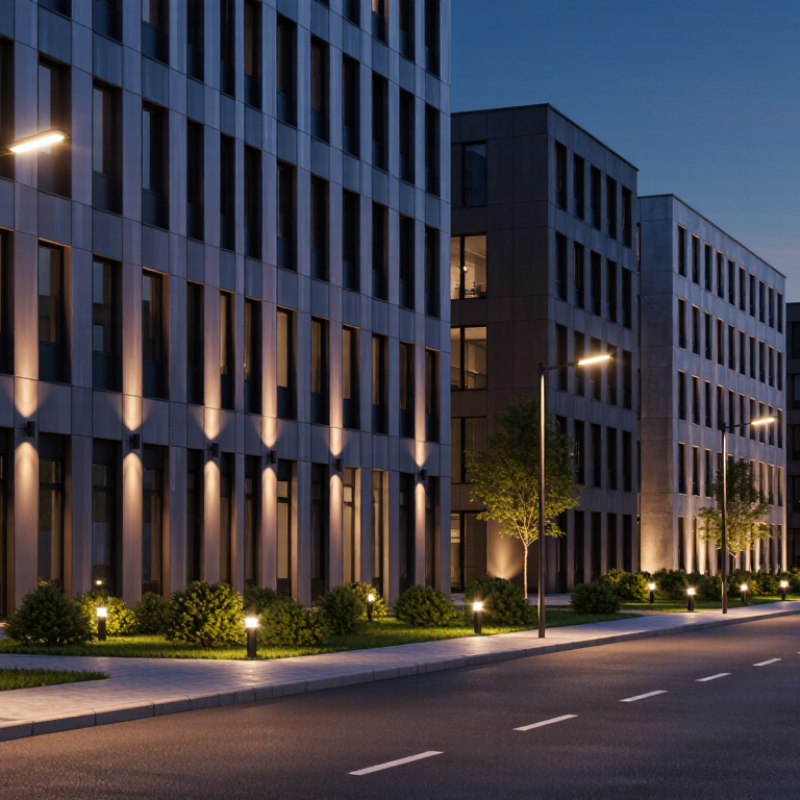
Architect Louis Kahn once said, “The sun never knew how great it was until it hit the side of a building.” His observation captures why Outdoor Lighting deserves careful design. Light can bring out a façade’s texture, but poor placement can create glare or uneven patches. That is easy to overlook in a showroom. Real sites are less forgiving.
This article introduces ten Chinese manufacturers and considers the capabilities buyers may want to verify, including product range, customization, certifications, and project experience. The list can help narrow a search, not replace factory checks or sample testing. A company may excel at streetlights yet offer limited support for landscape projects. No ranking can settle every buyer’s needs. Treat the comparison as a starting point, and ask specific questions before choosing a supplier.
China’s outdoor lighting industry is built around dense component supply chains, fast tooling, and large-scale LED assembly. A 2024 Grand View Research report estimated the global outdoor lighting market at over USD 15 billion in 2023. It also projected steady growth through 2030, driven by smart controls, infrastructure upgrades, and energy efficiency.
Real manufacturing quality appears in small details. Inspect the aluminum housing, drainage design, cable glands, optical lenses, and thermal management before comparing quotations. The International Energy Agency reports that LED lamps use around 75% less energy than incandescent lamps and last much longer. This advantage matters for roads, gardens, warehouses, and coastal projects.
Not every large exporter is a reliable partner.
A practical top-ten evaluation should examine certifications, testing records, failure rates, production consistency, and after-sales response. Request photometric files, ingress-protection test results, surge-protection data, and samples from current production batches. Laboratory documents help, but factory visits reveal more. Check soldering quality, powder-coating thickness, driver storage, and aging-test procedures. Some suppliers present excellent samples while delivering inconsistent batches later. That risk deserves attention.
Market reports often use different product definitions, so their figures are not perfectly comparable. Buyers should combine report data with shipment history, independent testing, and project references. This approach gives a more realistic view of China’s outdoor lighting manufacturing capability.
China Top 10 Outdoor Lighting Manufacturers?
Selecting the top ten requires more than comparing product catalogs. A reliable assessment begins with factory evidence, not attractive photographs. Reviewers should verify production capacity, quality procedures, engineering staff, and export experience. Factory visits can reveal details that brochures often hide, such as cable storage, sealing methods, and final inspection records.
Product performance receives heavy attention. Samples should undergo weather resistance, temperature cycling, corrosion checks, and photometric testing. Outdoor fixtures face rain, dust, ultraviolet exposure, and unstable installation conditions. The assessment also examines material choices, drainage design, driver stability, and replacement-part availability. Relevant safety certifications and market compliance documents must be current and traceable. A certificate alone is not enough.
Customer feedback adds practical evidence. Reviewers should examine delivery consistency, response times, installation guidance, warranty handling, and experience with large projects. Custom design capability matters when roads, parks, façades, or coastal sites require special specifications. Pricing is considered, but the lowest quote should not lead the ranking. Long-term operating cost matters more.
No scoring model is perfect. A smaller factory may offer stronger engineering support than a larger one. Some public project data may also be incomplete. For this reason, each manufacturer should receive a weighted score, with documented evidence behind every result. The final selection should remain open to revision as testing records, service performance, and market conditions change.
China’s leading outdoor lighting manufacturers are not defined by one product category. Their strengths often lie in focused engineering, flexible production, and the ability to adapt designs for different sites. Some specialize in roadway and area lighting, where beam control and consistent illumination matter. Others concentrate on landscape fixtures, emphasizing compact housings, discreet mounting, and finishes that withstand rain and dust. A capable manufacturer can explain how optical design, materials, and thermal management work together—not just share a catalogue. Details matter.
Factory experience is also visible in practical choices. Look for clear specifications, sample testing, stable color temperatures, and documented checks for water resistance and electrical safety. Ask how a supplier handles custom brackets, cable entries, and replacement parts; these small details can complicate installation later. Strong export-oriented teams usually communicate tolerances and lead times plainly, although production schedules can still shift. No supplier is perfect. A useful profile should therefore include both capabilities and limitations, such as minimum order quantities or restricted customization. Buyers should compare test reports and project references against their own climate, mounting height, and maintenance plan before selecting a partner.
This industry-level chart summarizes the outdoor lighting capabilities commonly evaluated when comparing leading Chinese manufacturers. The figures represent the number of capability areas out of ten assessment dimensions, rather than company rankings or brand-specific sales data. Core areas include LED technology, IP-rated protection, smart controls, solar solutions, and compliance testing.
China’s top ten outdoor lighting manufacturers should be compared through products, technology, and market strength, not factory scale alone. The ranking is not perfectly stable. Product testing, project delivery, and after-sales evidence often reveal more than promotional claims.
LED road luminaires now dominate many new infrastructure projects. The International Energy Agency reported that LEDs represented about half of global lighting sales in 2022, compared with roughly 5% in 2015. Strong manufacturers typically offer high-efficacy modules, 3,000K–4,000K color temperatures, and precise road-distribution optics. Look for LM-80 and TM-21 data, thermal testing, surge protection, and verified IP66 or higher ratings. A bright sample in a showroom proves little.
Smart controls separate capable suppliers from ordinary assemblers. DALI-2, Zhaga-compatible interfaces, photocells, and wireless monitoring can reduce maintenance visits. However, compatibility is often overstated. Field trials matter. The U.S. Department of Energy’s solid-state lighting reports continue to emphasize controls, optical quality, and lifetime performance as major value factors. Solar models deserve separate scrutiny, especially battery capacity during several cloudy nights. China’s manufacturing strength lies in integrated supply chains, rapid customization, and competitive export logistics. Yet buyers should inspect driver quality, salt-spray resistance, spare-part planning, and regional certifications. Cheap pricing can hide future replacement costs. Field reality matters.
Choosing among China’s top outdoor lighting manufacturers requires more than comparing catalog prices. I begin with the project conditions: coastal salt, winter temperatures, mounting height, beam angle, and maintenance access. A factory should provide IES or LDT photometric files, LM-79 test results, LM-80 data, and clear warranty terms. These documents reveal more than polished product photographs.
Energy performance deserves careful checking. The U.S. Department of Energy reports that LED lighting can use up to 75% less energy and last up to 25 times longer than incandescent lighting. The International Energy Agency has also estimated that lighting uses about 15% of global electricity. Therefore, ask for measured system efficacy, not only the LED chip’s claimed efficiency. A difference of ten lumens per watt can affect thousands of installed fixtures.
Test the details yourself. Request a production sample, then inspect driver temperature, gasket compression, cable glands, and optical uniformity. For coastal projects, review salt-spray evidence and the actual corrosion protection process. IEC 60598 safety requirements and CIE 150 guidance on obtrusive light should influence the technical specification. I once trusted a strong sample but overlooked inconsistent batch wiring. That was my mistake. A dependable manufacturer accepts third-party inspection, shares failure data, and explains what happens after the warranty ends. Cheap quotations sometimes hide expensive replacements.