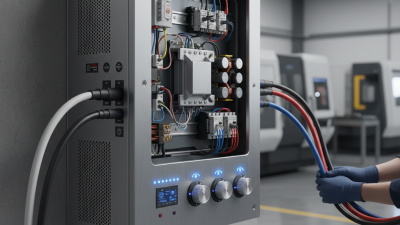
Choosing the 2026 best three phase to single phase converter requires more than comparing prices or advertised power ratings. The right model must match the source voltage, output voltage, frequency, load type, and operating environment. A workshop running a 230-volt single-phase motor needs different protection from a control cabinet powering sensitive electronics. Small details matter.
Electrical safety educator Mike Holt has warned, “Electricity is not forgiving.” That principle belongs at the center of every three phase to single phase converter decision. A reliable converter should manage phase imbalance, heat, overloads, voltage variation, and harmonic distortion. It should also provide clear wiring instructions and suitable protection devices. Look for tested components, credible certifications, accessible technical support, and a manufacturer with documented performance data.
Real-world testing is equally important. Measure the input voltage with the machine operating, not only when the system is idle. Check motor starting current, enclosure temperature, cable size, and continuous load percentage. A converter that performs well for ten minutes may struggle after several hours in a dusty factory. Cooling fans can collect debris. Terminals can loosen. These are ordinary issues, but they are often ignored.
There is no universal “best” unit. The most expensive option may be unnecessary, while the cheapest model may create unstable output or early equipment failure. I would compare waveform quality, efficiency, noise, warranty coverage, and service history before selecting a model. Even then, the final choice deserves review by a qualified electrical professional. Mistakes here can be costly. Sometimes, the specification sheet looks perfect, yet the installation tells a different story.
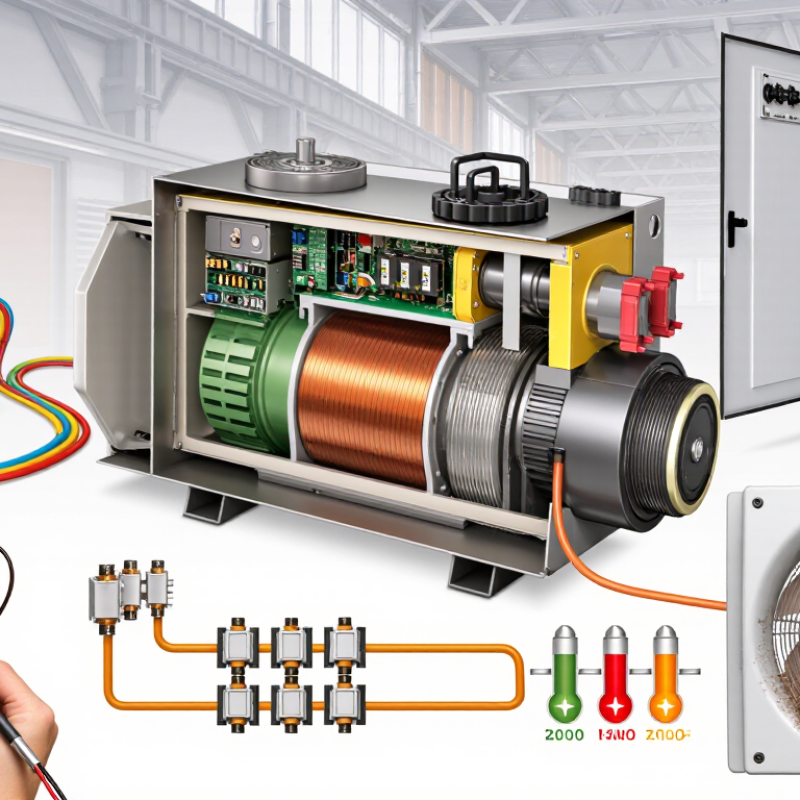
A three-phase to single-phase converter lets equipment designed for single-phase power operate from a three-phase supply. It changes how electrical power is delivered to the load; it does not simply rearrange wires. Depending on the design, conversion may use transformers, electronic components, or a motor-based system. The right method depends on the source voltage, required output voltage, and the equipment’s power needs.
For example, a workshop may have three-phase service but need to run a single-phase pump. The converter must support the pump’s running load and its brief, higher starting current. Check the equipment nameplate for voltage, frequency, and current, then compare those values with the converter’s rated output. Some designs provide a neutral connection; others do not. Do not assume one is available.
Details matter. A converter that works with a steady heater may not suit a motor with a heavy startup load. Output quality can also affect sensitive electronics. In practice, sizing from running watts alone can be misleading, and I would treat that as an easy mistake to make. Have a qualified electrical professional verify the wiring, protection, grounding, and compatibility before installation. Safety is not a small detail.
Three-phase power carries current through three alternating waveforms, each offset by 120 degrees. A single-phase load needs one alternating voltage, but the safest conversion method depends on its voltage, starting current, and duty cycle. In some installations, a suitable transformer draws power between two phases or between a phase and neutral. The output voltage and available capacity depend on that connection. A transformer changes voltage; it does not automatically balance the three-phase supply.
For a dedicated single-phase output, electronic converters can rectify incoming AC into a DC link, then use switching circuits to produce the required AC waveform. Filtering helps control electrical noise, while protection circuits address overloads and faults. Small details matter. A motor starting under load may demand several times its running current, so checking only its nameplate watts can undersize the converter. The U.S. Department of Energy’s 2014 bandwidth study estimates motor-driven systems use about 54% of electricity in U.S. manufacturing. That figure is not a converter-sizing rule, but it shows why motor loads deserve careful attention. Measure the supply voltage, output voltage, peak demand, and operating pattern before selection. Phase imbalance can still be overlooked. It is easy to miss. A qualified electrical professional should verify the installation and protective devices.
Three-phase to single-phase conversion can use several different devices, and the right choice depends on the load. A transformer connected across two phases is often the simplest option. It can supply a single-phase appliance, such as a heater or small workshop tool, when its voltage and current ratings match the equipment. Check the wiring diagram carefully. A line-to-line connection may provide a different voltage from a line-to-neutral connection, and not every three-phase system has a neutral conductor.
Electronic converters use power electronics to reshape the incoming supply. Some convert AC to DC, then generate a controlled single-phase AC output. They can offer useful voltage regulation and protection features, but their specifications matter: confirm output waveform, continuous power rating, starting-current capacity, and compatibility with sensitive equipment. Rotary and static phase converters are commonly designed to create three-phase power from a single-phase source, so they are not automatically suitable for the reverse task. The names can be confusing.
In practice, a large single-phase load connected to only two phases can unbalance the three-phase system. That may affect other equipment or cause excessive current on one phase. Measure the load, including startup demand, and review the supply arrangement before selecting a converter. A qualified electrical professional can verify connections and protective devices. It is easy to overlook neutral requirements; I would not guess.
This illustrative chart shows a balanced 230/400 V, 50 Hz system: three phase-to-neutral input waveforms at 230 V RMS and a 400 V RMS single-phase output taken between phases A and B. Actual converter voltage, frequency, and configuration depend on the equipment and supply.
Choosing a three-phase-to-single-phase converter starts with the equipment nameplate, not its advertised maximum. Check the required output voltage, frequency, and current. Confirm whether the load needs a neutral connection; not every converter provides one. Small details matter.
Size the unit for both continuous demand and startup surges. A motor may draw several times its running current for a brief moment, while heaters usually present a steadier load. Compare the converter’s continuous and peak ratings with the equipment’s specifications. That number is easy to misread. Leave a sensible margin, especially if several machines may start together.
Load type matters, too. Sensitive controls or variable-speed drives may need a stable output waveform and careful harmonic management. Ask for documented output limits rather than relying on a broad compatibility claim. Check the enclosure rating, cooling needs, and ambient temperature where the unit will operate. A dusty workshop corner can shorten service life. It happens. Review grounding, overcurrent protection, and installation requirements with a qualified electrician. I would not assume a converter suits every load, even when the voltage appears correct.
A three-phase-to-single-phase converter should be judged under the load it will actually serve, not by its nameplate rating alone. Check the continuous output and the brief surge needed when a motor starts. A compressor that runs smoothly may still draw a sharp starting current. Measure voltage while the equipment is operating; an unloaded reading can hide a drop that affects performance. That detail matters.
Converter design also changes the result. Rotary units can suit heavier motor loads, while electronic models may offer compact installation and better control for compatible equipment. Neither is automatically right for every workshop. Sensitive controls can react poorly to uneven voltage or waveform distortion, so review the equipment manufacturer’s input requirements. If several machines run at once, include their combined demand and starting sequence.
Safety deserves the same attention as output. Confirm grounding, overcurrent protection, ventilation, and enclosure suitability with a qualified electrical professional. Heat buildup inside a dusty cabinet is easy to overlook. Cost comparisons should include installation, maintenance, energy use, and the cost of downtime—not just the purchase price. A cheaper unit can become expensive if it struggles with frequent starts. I would still verify the load figures on site; estimates alone can miss awkward real-world peaks.
The best option depends on the source voltage, required output voltage, load size, and whether electrical isolation or regulated output is needed. Cost ratings below are relative for comparable capacity; actual prices depend on rating, specifications, and installation.
| Option | Best suited for | Performance | Capacity and limitations | Safety considerations | Relative cost |
|---|---|---|---|---|---|
| Phase-to-phase connection | A single-phase load whose rated voltage matches the three-phase system’s line-to-line voltage. | Supplies the existing line-to-line voltage and frequency. No conversion equipment is needed, so there are no converter losses. | The load draws from two phases and can increase phase imbalance. Available capacity depends on the source, feeder, protection, and utility or site imbalance limits. | Confirm the load voltage, phase-to-phase voltage, conductor sizing, and overcurrent protection. Have a qualified electrician assess the effect on the other phases. | Low when the supply and load are already compatible. |
| Single-phase transformer | A single-phase load that needs a different voltage, or an isolated output where an isolation transformer is specified. | A transformer connected across two phases can change voltage; it does not change frequency or convert three-phase power into a balanced single-phase source. | Output is limited by the transformer’s kVA rating and thermal conditions. The single-phase load still uses two phases of the supply. | Select suitable primary and secondary protection, grounding, enclosure, and temperature ratings. Isolation is provided only by an isolation-type transformer. | Low to moderate, depending on kVA, voltage ratio, and isolation requirements. |
| Three-phase input, single-phase output electronic converter | Applications requiring a specified single-phase output, such as regulated voltage or a defined output frequency. | A rectifier-and-inverter design can produce single-phase AC. Output regulation, waveform quality, and frequency range depend on the unit’s design and ratings. | Use the continuous output rating and overload curve—not input current alone—to size it. Confirm compatibility with the load, including motor starting or other surge demands. | Check input and output protection, grounding, fault response, cooling, harmonic performance, and installation instructions. Stored energy may remain after power is disconnected. | High relative to a direct connection or basic transformer; specifications and capacity strongly affect price. |
| Rotary or static phase converter | Generally intended to derive three-phase power from a single-phase supply—not to convert a three-phase supply into single-phase power. | Not normally the appropriate choice for this conversion direction. A phase converter’s output configuration and operating limits depend on its design. | Do not assume it provides a correctly rated single-phase output. Verify the manufacturer’s input and output specifications for the exact application. | Incorrect connections or assumptions about output voltage and phase can damage equipment or create shock and fire hazards. Obtain a design review before use. | Not applicable unless a specific unit is explicitly rated for the required conversion. |
Practical takeaway: If the load’s voltage matches the line-to-line supply and phase imbalance is acceptable, a direct phase-to-phase connection is usually the simplest option. Choose a transformer when voltage adjustment or specified isolation is needed, and a purpose-built electronic converter when the output must be actively regulated. Confirm local electrical-code requirements and have the installation evaluated by a qualified electrician.