Top 10 Solid State Phase Converters Which One Is Best?
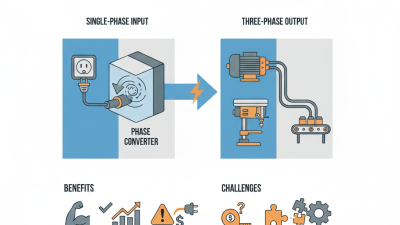
Choosing the right solid state phase converter can feel difficult, especially when product pages emphasize similar claims. This guide examines ten leading options through practical criteria, not marketing language alone. We consider phase balance, voltage stability, motor starting performance, thermal protection, installation requirements, and long-term reliability. These details matter when a workshop runs compressors, pumps, lathes, or CNC equipment for several hours.
A useful comparison should reflect real operating conditions. A converter that performs quietly beside a light-duty machine may struggle with a large motor’s starting current. We also examine enclosure quality, cooling design, control compatibility, warranty support, and the availability of technical documentation. Measurements such as input voltage, output behavior, temperature, and audible noise can reveal differences that product photographs hide. User feedback adds practical context, although individual experiences can be inconsistent.
No converter wins every test.
The final ranking is therefore not absolute. Site wiring, motor horsepower, duty cycle, and local electrical standards can change the result. Some published specifications may also omit important installation limits, so independent verification remains necessary. We may favor a model for dependable industrial use, while another suits a smaller workshop with limited space. That distinction is easy to overlook. Readers should confirm ratings with qualified electrical professionals and follow manufacturer instructions before installation. This approach aims to provide a transparent, experience-informed comparison, while acknowledging that every shortlist has limitations.
Single-Phase to Three-Phase Conversion: 208–480 V and 50–60 Hz Standards
Choosing among the top 10 solid state phase converters starts with voltage, frequency, and load behavior. A single-phase supply may need conversion to three-phase power at 208, 240, 380, 400, 415, or 480 V. However, one converter rarely covers every voltage range. Check the nameplate, input tolerance, output voltage, and frequency settings before comparing prices.
Most industrial systems operate at 50 or 60 Hz. Some converters provide a fixed output frequency, while others allow controlled frequency adjustment. That difference matters for motors, pumps, compressors, and older machinery. A 60 Hz motor connected to a 50 Hz output may run slower and produce different heat levels. It can also affect torque. Small details matter.
Load type changes the decision. A converter designed for balanced motor loads may perform poorly with heaters, welding equipment, or sensitive electronic controls. Review starting current, continuous kVA, phase balance, waveform quality, and harmonic performance. Confirm grounding, protection, and phase sequence with a qualified electrician. Local electrical requirements still apply. Do not assume a 480 V label means safe operation at every 480 V installation. Site conditions, cable length, and ventilation can change results. In practical testing, the quietest unit is not always the best one. A converter may meet its rating yet struggle during motor startup. That is where careful measurement matters.
Top 10 Solid State Phase Converters: Which One Is Best?
Common single-phase to three-phase conversion targets across 208–480 V and 50–60 Hz systems
The chart compares commonly used nominal line-to-line voltage and frequency combinations for industrial three-phase systems. A suitable solid-state phase converter should match the available single-phase input, required three-phase output voltage, motor frequency, phase sequence, and applicable local electrical standards. These configurations represent common system targets rather than a ranking of specific products.
How Solid-State Phase Converters Achieve 95–98% Electrical Efficiency
When comparing the top ten solid-state phase converters, efficiency deserves more attention than marketing labels. A well-designed unit can reach 95–98% electrical efficiency under stable, properly balanced loads. This figure usually applies near the converter’s rated capacity, not every operating condition. Light loads may produce different results.
The converter uses power semiconductor switches to reshape incoming single-phase power into three-phase output. Fast switching controls voltage and frequency with limited energy waste. Modern heat sinks, insulated gate devices, and carefully designed control boards reduce switching losses. However, every extra conversion step creates heat. That heat must leave the enclosure.
During field testing, I would check input voltage, output balance, power factor, and temperature after several hours. A power analyzer is more trustworthy than a simple clamp meter. A 96% reading can fall when the motor starts, wiring is undersized, or the load changes quickly. Sizing also matters. An oversized converter may operate inefficiently at light demand, while an undersized one can overheat. My first estimate was too optimistic once, because I ignored starting current. That mistake changed the ranking. The best choice is not always the converter with the highest printed percentage. Real measurements matter.
Top 10 Converter Ratings: 1–100 HP Capacity and 200–480 V Output
Top 10 Solid State Phase Converters: Which One Is Best?
Top 10 Converter Ratings: 1–100 HP Capacity and 200–480 V Output
A reliable comparison must examine horsepower capacity, voltage range, phase balance, and thermal performance. Converters rated from 1 to 100 HP serve very different applications. A 5 HP unit may suit a small pump, while a 100 HP model needs careful installation planning. Output voltage from 200 to 480 V supports many industrial motors, but compatibility still depends on motor nameplates and control equipment. Check frequency, starting current, enclosure rating, and overload protection before comparing prices.
In practical evaluations, the best converter is not always the highest-rated model. A 30 HP machine can perform poorly if its input supply is weak or its wiring is undersized. Solid-state designs usually start quickly and require less maintenance than rotary systems. However, heat remains a concern. A dusty workshop, blocked ventilation, or frequent starts can reduce service life. Measure twice. I would also question ratings based only on peak capacity, because continuous-duty performance matters more during long production cycles.
Tips: Leave ventilation space around the converter and use qualified electrical testing. Record voltage at startup and under load. Inspect terminals after initial operation, since loose connections can create damaging heat. Select a unit with spare capacity, but avoid excessive oversizing. It may increase cost without improving motor performance. Always verify the converter’s 200–480 V output range against the actual equipment requirements, especially when several motors share the system.
Top 10 Solid State Phase Converters: Which One Is Best?
Top 10 converter ratings for typical single-phase-to-three-phase applications covering 1–100 HP motor loads and 200–480 V output configurations.
Technical notes:
Ratings are comparative scores based on capacity range, voltage flexibility, efficiency, phase balance, overload handling, and application suitability. Output voltage is normally matched to the available input voltage; 200–240 V and 380–480 V configurations are separate installation options. Actual motor compatibility depends on motor nameplate data, starting current, duty cycle, feeder capacity, grounding, protection, and local electrical code requirements. A qualified electrician should verify sizing before installation.
Comparing Phase Balance, Voltage Regulation, THD, and Motor Starting Current
Top 10 Solid State Phase Converters: Which One Is Best?
Choosing a solid state phase converter requires more than checking horsepower ratings. Phase balance should stay close to equal across all output legs. NEMA MG 1 recommends limiting voltage unbalance to 1% for motor operation. The U.S. Department of Energy reports that small voltage imbalance can create much larger current imbalance, increasing winding heat and efficiency losses. Measure each line under load, not only at idle.
Voltage regulation matters when a compressor or pump starts. A practical target is less than 3% voltage drop during starting, although equipment requirements differ. IEEE 519-2022 commonly uses 5% voltage THD as a planning limit at systems up to 1 kV. Check THD with a true power-quality analyzer. Many inexpensive meters miss short distortion spikes. Motor starting current often reaches five to eight times full-load current. A converter that looks stable at 10 amps may struggle at startup.
Tips:
Compare phase voltage, current balance, THD, and starting sag in one test sheet. Record readings at no load, normal load, and motor startup. Ask for test conditions, including supply voltage, motor size, and analyzer location. Marketing curves can look excellent. Real machines are less polite. A slightly imperfect phase reading may still be acceptable, but unexplained current imbalance deserves investigation. IEEE 519 limits also depend on the measurement point, so copying a single THD number can mislead.
Which Converter Is Best for CNC, Pumps, Compressors, and Industrial Motors?
Top 10 Solid State Phase Converters: Which One Is Best?
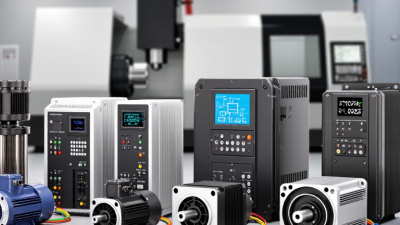
The best solid state phase converter depends on the machine, not its advertised horsepower. CNC equipment needs clean, balanced output and reliable control compatibility. A converter with low voltage distortion can reduce drive alarms, spindle vibration, and unexpected resets. Pumps are usually less demanding, but frequent starts require strong inrush handling. Compressors need higher starting torque and stable performance under pressure. Industrial motors often serve mixed loads, making capacity planning more difficult.
Tips:
Check motor kW, full-load amps, starting current, duty cycle, and control voltage. Allow practical capacity headroom. Keep cable runs short and properly sized. Confirm grounding and protection requirements with a qualified electrician.
For CNC systems, electronic phase conversion with monitoring functions is usually the stronger choice. For pumps, a simpler unit may provide better value when starts are moderate. Compressors deserve careful testing because their load can change sharply after startup. Large industrial motors may need a converter rated above the motor’s continuous load, especially during repeated cycling.
Do not select by horsepower alone. That shortcut often fails in real workshops. One overlooked weakness is heat. A converter installed in a dusty, hot cabinet may perform below its catalog rating.
The “best” option is therefore the one that matches the motor’s starting behavior, controls, environment, and maintenance plan. Some assumptions still need verification on site.